


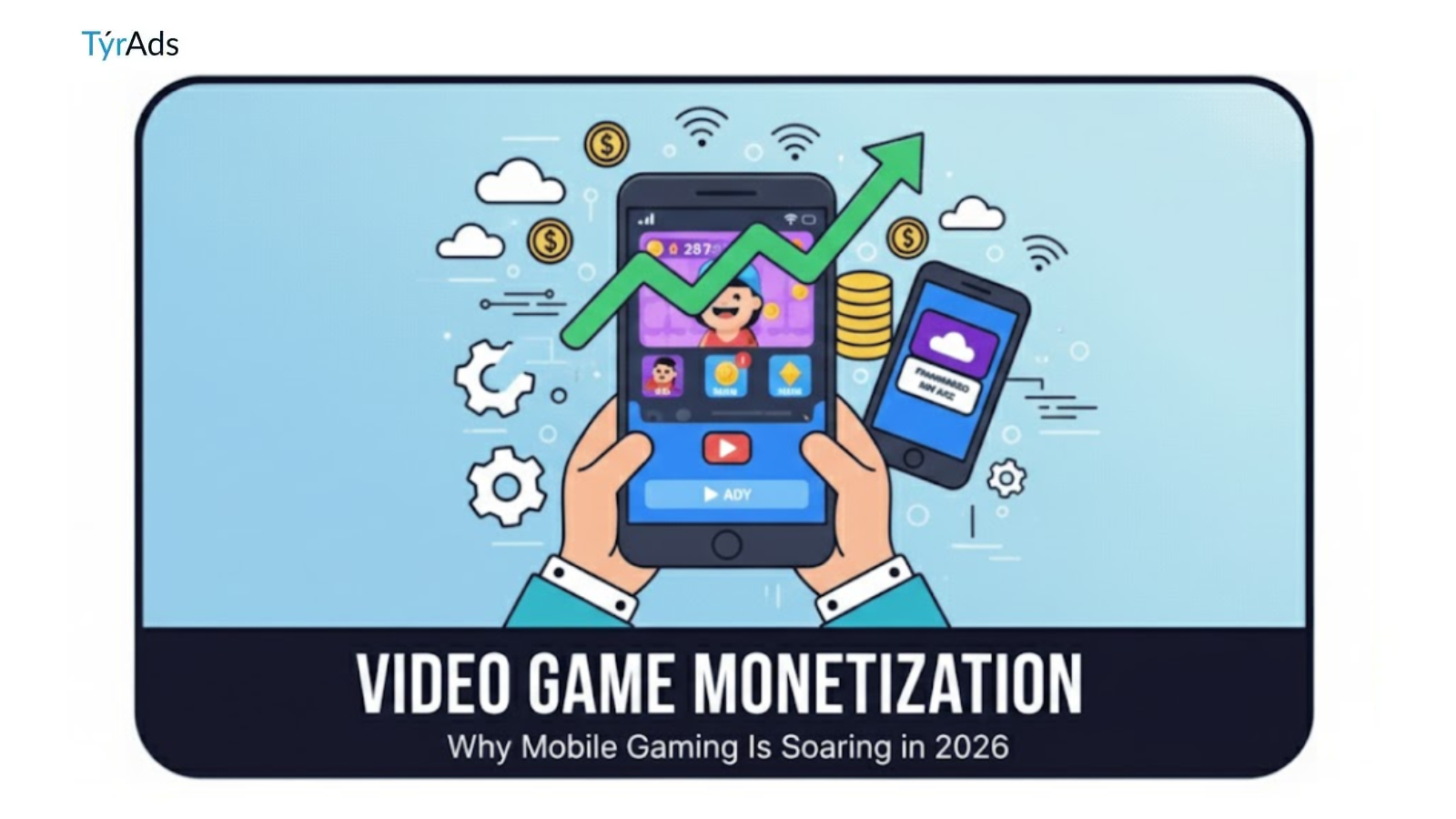
Do you want to learn about the secret behind the mobile gaming growth in 2026? Well, it’s all about smarter video game monetization that makes playing better for everyone. Let’s understand it with an example. Suppose this is Sarah. Friday night, she’s tired and does not care about firing up some massive PC setup.
She just wants easy and fun. So, she picks up her phone and jumps into her favorite game. Years ago, she would have to sit through five ads that she could not skip, ending up quitting the game. Now things have changed. She sees a quick pop-up. “Do you want to watch a short ad for double resources?”
Sarah goes for it and plays a cool little ad demo. She finds out about another game, saves the idea for later. Back in her session, she’s got those extra resources and finally upgrades her castle. Sarah didn’t get frustrated; she felt rewarded.
This is how mobile gaming feels now. It is fairer and more rewarding. Because small changes make big differences.
If you want to learn more about mobile game monetization, watch our podcast now. In this podcast, Zino Rost van Tonningen shared his key insights on the mobile game industry and how monetization strategies have grown over time.
Why Is Video Gaming Monetization Central To 2026 Mobile Growth?
If you ask game studios, their main goal is to earn a living. Not long ago, they used to try every trick to get your money. But now things are different. The plan goes more toward building an experience where players actually want to spend time and sometimes spend money, too.
So the hybrid IAP and IAA strategy is everywhere. Simple, right? Developers mix in-app purchases (IAP) with in-game ads (IAA). You can buy cool in-game items or watch a few ads and get rewards. Feels way more chill than before. The control stays in your hands, no pressure.
Dev teams are catching on with data. They see what you like, how you play, then make offers that seem made for you. If you like decorating your game setup, you might see a nice deal on decor. This is hyper-personalization. IAP deals seem less desperate and more helpful.
It even helps companies push their return on ad spend ROAS numbers up while keeping things fun.
How Do Accessibility and Cross-Platform Features Accelerate Adoption?
Right now, almost everyone has a mobile phone. Playing a game is so easy. No expensive hardware needed. No learning curve either. Just tap, play, enjoy, and repeat. That’s probably the biggest driver for mobile gaming growth in 2026. But also, cross-platform progression changed a bunch.
Try this: playing on the way to work, then picking up where you left off at home. Your data follows you, and your friends show up no matter the device. It just works. Removing all hassle draws more people in and keeps old players from dropping out.
And with cloud gaming on mobile, you get those fancy, giant games straight on your phone. Big games that used to be only on PC and console are right there, anytime. More people jump in, no big spend needed, the user base grows. Everyone gets a shot.
Which New Monetization Methods Will Grow Audiences in 2026?
Older ways of game monetization are fading away. Now it’s about giving value. Gamers spend when it feels worth it. Sub passes, like season passes or battle passes, are common now. Simple subscription, steady stream of in-game perks, new outfits, challenges, whatever.
People get into a habit of logging in each day. Studios like steady money, too. Another one is offerwall personalization. An offerwall is just a bunch of simple tasks or mini-offers, such as surveys or free apps. Just a few years back, these were messy and felt like a chore.
So, in 2026, they’re more personal and actually have things players might care about without being spammy at all. That brings in new users who play for real.
How Can LiveOps and Personalization Boost Engagement and Revenue?
Launching a game is just the start. It’s about keeping players coming back every week or month. That’s basically what LiveOps monetization is about. Things like small tournaments, holiday events, and adding new characters often keep the game fresh. People talk about it and invite friends. So, LiveOps works as a heartbeat, keeps things interesting.
What makes it even better is hyper-personalization. Teams can tell if a power user hasn’t logged in lately. So, a push alert pops up a special “come back” bundle or a discounted pack just for you. If you get stuck, maybe a free retry or boost shows up. These signals matter.
Playtime-based rewards are also big: if you stick around and play longer, the game pays you with small rewards. It feels good and keeps you hooked.
Why Are UA and Creative Trends Fueling Popularity in 2026?
So, having a cool game does not mean anything if nobody finds out about it. That’s where a clever user acquisition strategy comes into play. Gone are the days of boring, random banner ads everywhere. The key now is to bring in folks who actually want your game.
Big for this are rewarded UA channels. For instance, try another game and get a neat prize. You win, developers win by growing their user base. Many teams swear by this in their user acquisition campaigns these days. Ads are more engaging than ever before.
Ever played a demo ad right inside another game?
These playable ads turn curiosity into installs. They ramp up conversion rates because people can see right away whether a game fits them.
Studios even split ads by audience: hard-core gamer, puzzle lover, casual friend, all see what fits. That’s genre expansion midcore casual, and it makes marketing much better. It pushes a game up the list to stand out from the competition in all those crowded app stores.
How Can Data and Automation Enhance Monetization and Growth in 2026?
Data is everywhere. Every click, every purchase, every ad watched teaches studios what players want. They do not need to guess. If stats show most people get frustrated and quit at level 15, developers spot that. They change it, so more players stick around.
The same works with ad load optimization. Nobody likes seeing too many ads. Now, games use signals to decide how many ads to show you, depending on your own gameplay habits. It’s not random. Those who do not buy in-game items see a few more ads; big spenders see fewer. This keeps more players happy.
This links with app store optimization ASO as well. Teams check which search terms, pictures, and even reviews are bringing in the best fans in stores such as Google Play or Apple’s App Store.
Then, they tweak pages based on that. Everything from ad campaign results to in-game prices can now be changed faster. And with privacy frameworks like SDK 3.0 privacy, there’s more attention on protecting your data, but still enough learning to improve things.
Some Real Talk Before We Wrap Up
Why is there so much mobile gaming growth in 2026? Because companies finally started listening to real players. The hype around graphics or fancy brands does not mean much if the game feels unfair or does not respect your time. Opening up video game monetization gives players freedom. Using choices like hybrid IAP and IAA strategy lets everyone play their own way.
Techniques like cross-platform progression and cloud gaming on mobile just make it easier for anyone to join the fun. And using real data for smarter changes brings games closer to player needs than ever before. So playing games in 2026 is way more friendly, fair, and it really feels like both sides are on the same page now.
Frequently Asked Questions About Video Game Monetization
Why Should I Focus on Video Gaming Monetization In 2026?
You should focus on video game monetization because smarter monetization just makes your games better. Studios that use fair exchanges with subscription passes and rewarded ads focus more on keeping you playing longer than on pushing you to buy things you do not want.
How Does Cross-Platform Access Grow Mobile Popularity?
Coss-platform progression makes it easier to grow mobile popularity. Because you get to jump in and out whenever you want. Play at work, at home, during your break, anywhere. That’s why more people join and play.
What Proven LiveOps Tactics Boost Engagement?
LiveOps tactics like new weekend challenges, special events, or character launches can boost engagement. Doing so keeps your audience tuned in and coming back for more. Moreover, offering exclusive rewards to players who participate in these events can also increase retention and engagement.
How Does Data and Automation Improve Results?
Data and automation help fix audience pain points quickly. If most quit at the same spot, devs will fix it. With automation, you can show the right deals to the right audience you care about. You can easily do it through offerwall personalization and the right amount of ads, not too many. This way, players feel like games fit their own style more.