


Today, mobile apps are no longer just tools. They’ve become our lifelines. We rely on them for everything, from ordering groceries to managing our finances.
The general use of mobile devices offers developers a great opportunity to grow and develop new applications. However, with so many apps available, a visually appealing design alone won’t guarantee success.
App monetization and strategic partnerships with other mobile apps can unlock rapid growth, boost user engagement, and open doors to entirely new audiences.
Imagine your app able to tap into another popular platform, driving unprecedented levels of brand awareness and customer loyalty. This is the power of successful mobile app partnerships.
In this article, we’ll discuss the strategies that will push your mobile app partnership efforts to new heights in 2025
We’ll explore real world examples of successful collaborations, provide actionable insights, and provide you with the knowledge to thrive in this dynamic mobile-first era.
What Are Mobile App Partnerships?
A mobile app partnership is a collaboration between two or more companies to achieve mutual business objectives through their mobile apps.
These partnerships can take various forms, including marketing collaboration, joint development projects, and strategic data sharing alliances.
The ultimate goal of mobile app partnership is to complement strengths of the app to enhance user engagement, expand brand reach, and drive revenue growth.
Examples of Successful Collaborations
- Scan & Earn: Reward campaign for scanning Tyson products in-store.
- Boosted Sales & Visits: Increased store visits and product awareness.
- Enhanced Engagement: Tyson saw higher brand visibility, Shopkick gained active users.
- Virtual Fitting: Users tried on Levi’s clothes via Snapchat.
- Increased Engagement: Attract new users and boost brand awareness.
- Innovative Marketing: Successfully integrate mobile apps with immersive AR technology.
Why Mobile App Partnerships Matter
Mobile app partnerships have the potential to transform both user experiences and business outcomes. Mobile app companies can achieve goals that would be difficult to accomplish independently by collaborating.
Enhancing User Engagement
Strategic partnerships can increase user experiences, apps engagement rate, and add value to users.
Here’s how partnerships can drive user retention:
- Collaborative Features: Offering loyalty programs, in-app challenges, or gamified rewards incentivizes users to spend more time on your apps and keep coming back.
- Enhanced Integration: For example, a fitness app partnering with a wearable device brand can provide:
- Real-time health tracking.
- Personalized workout recommendations.
- Increased Utility: These additional features, such as loyalty programs and integration with other devices, make the app more functional and useful. This encourages users to use it consistently because they feel they are getting more value from the app.
A helpful tip for enhancing engagement and loyalty is offering exclusive rewards or experiences through the partnership.
This strategy is highly effective to make customers feel like they are being valued and appreciated.
Expanding Brand Reach
Collaborating with complementary brands allows your business to reach new audience segments that you may not have got independently.
Here’s how partnerships can expand your reach:
- Tap Into New Audiences: Joint efforts with brands in similar or related industries allow you to access their customer base while offering added value to your own.
- Share Resources for Promotion: Pooling marketing budgets, promotional strategies, and advertising tools creates more impactful campaigns.
- Create Cross-Promotional Deals: For example, a travel app partnering with a ride-sharing service could offer package deals or discounts to travelers who need reliable transportation, boosting both apps’ visibility.
Common Mistakes to Avoid:
- Partnering with brands targeting different customer bases.
- Collaborating with brands whose values clash with yours.
- Pursuing partnerships without shared objectives.
Types of Mobile App Partnerships
It’s important to understand various types of app partnerships that can serve your specific goals and requirements. Each type offers unique benefits and opportunities for collaboration, here’s a more detailed explanation.
Marketing Partnerships
Marketing partnerships focus on co-branded campaigns and promotional activities that enhance visibility and attract users. These partnerships often use creative marketing tactics to create a win-win for both parties.
Examples of Marketing Partnerships
- Social Video Campaigns: Collaborations that involve platforms like TikTok, Instagram, or YouTube to create engaging, shared content. For example, brands can co-sponsor challenges or create influencer-driven campaigns to target overlapping audiences.
- In-App Rewards: Apps can integrate reward systems where users earn points redeemable across partner platforms, encouraging cross-platform engagement.
- Real Case Examples: Starbucks and Spotify created a co-branded experience, offering curated playlists in Starbucks stores and allowing customers to influence the music selection through the Spotify app.
A helpful tip to reach a wider audience by partnering strategically. Focus on brands with similar customer profiles and complementary offerings.
Development Partnerships
These partnerships involve co-developing an app, feature, or integration that benefits both parties. Businesses usually use these methods when they want to combine their technical expertise or enhance the user experience through collaboration.
Examples of Development Partnerships
- Feature Integration: Ride-sharing apps partnering with mapping and navigation services to provide accurate routes.
- Co-Development: Fitness and wearable tech companies teaming up to offer health-monitoring integrations, such as step tracking, heart rate monitoring, or custom fitness plans.
- Example: Apple and Nike collaborated to create the Nike Run Club app, which integrates seamlessly with Apple Watch, offering users real-time tracking and coaching features.
That’s why for a development partnership you need to make sure all features work together and that you have a clear plan with deadlines. That’s how you avoid delays and keep things running smoothly.
Strategic Data-Sharing Alliances
Data-sharing partnerships allow companies to exchange analytics and insights that will help with decision-making process and improve their offerings. While this type of collaboration comes with privacy challenges, it can unlock new opportunities for personalization and targeted marketing.
Benefits of Data-Sharing Partnerships
- Enhanced Personalization: Sharing user behavior patterns allows apps to refine their recommendations and offerings, improving user satisfaction.
- Optimized Marketing: Collaborative data use can lead to more effective targeted ads and campaigns.
- Example: A retail app and a payment app may share anonymized purchase data to identify trends and create tailored promotions for shared audiences.
Common Mistakes to Avoid
- Failing to establish clear data-sharing agreements.
- Ignoring to implement strong privacy protocols.
- Compliance violations due to poor data handling
- Damaging user trust due to privacy concerns.
How to Build Successful Mobile App Partnerships
Building a successful mobile app partnership requires a clear roadmap and a commitment to collaboration. The following steps can help your partnership achieve its intended goals.
Define Clear Goals and Expectations
Combining goals and setting essential KPIs is critical to ensure both parties benefit equally. Both parties must agree on shared goals and outline specific, measurable outcomes to track progress.
Steps to Define Goals
- Identify primary objectives, such as increasing downloads, improving retention, or boosting revenue.
- Set measurable KPIs, like achieving a 25% increase in user engagement or reducing churn rates by 15%.
- Agree on deliverables and timelines to ensure accountability.
It’s important to revisit your partnership goals. Adjust regularly to user needs and market conditions to ensure the partnership remains successful.
Choose the Right Partner
Selecting the right partner can make or break your collaboration. It’s important to find a partner whose strengths, values, and audience align with your goals.
Key Factors to Consider
- Experience and Portfolio: Review the partner’s track record, including past collaborations and client reviews. This can provide insights into their expertise and reliability.
- Complementary Strengths: Identify partners that offer unique capabilities that enhance your app. For instance, a meditation app might partner with a sleep-tracking device for mutual value.
- Shared Values and Vision: Ensure the partner’s brand ethics aligns with yours to avoid potential conflicts in messaging or audience expectations.
One of the mistakes that happen in partnerships is rushing to make a decision, without really knowing your collaborators.
That’s why it is crucial to assess potential partners beforehands. Try to coordinate priorities and know each other’s expectations for the partnership.
Establish Transparent Communication
Clear and open communication is the foundation of any successful partnership. Misunderstandings or miscommunication can ruin even the best-planned collaborations.
Key Components of Transparent Communication
- Establish a central point of contact for both parties.
- Document key decisions and share updates through structured reports.
- Foster a culture of openness and trust by encouraging feedback.
A good tip for better communication is to avoid overwhelming your team or partners with excessive messages across multiple channels. Prioritize organized systems for communication and focus on quality interactions instead.
Monitor and Optimize Performance
Once the partnership is starting, continuous monitoring and optimization are essential to ensure success. Data-driven insights allow both parties to identify what’s working and where improvements are needed.
Steps to Monitor Performance
- Use analytics tools such as Google Analytics, Mixpanel, or App Annie to track key metrics like:
- User acquisition rates
- Retention rates
- Engagement levels
- Revenue generated from the partnership
- Conduct periodic performance reviews to evaluate progress against KPIs.
- Identify areas for improvement and implement updates as needed.
- Optimization Strategies:
- A/B test campaign elements, such as in-app messaging or reward structures.
- Collect user feedback to improve features or promotions format.
- Collaborate on adjusting strategies based on upcoming trends or insights.
Regularly reviewing performance is crucial for identifying areas where improvements can be made. This step can also help you optimize outcomes and keep the partnership productive.
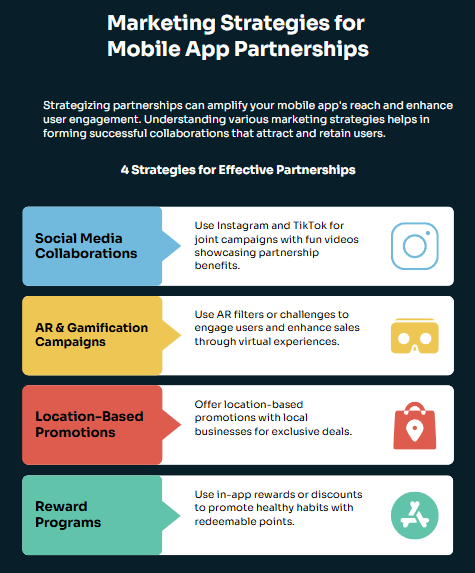
Marketing Strategies for Mobile App Partnerships
Strategically forming partnerships can significantly expand the reach of your mobile app while boosting user engagement. Here are some effective marketing strategies for mobile app partnerships:
Social Media Collaborations
Social media campaigns can be effective in reaching large audiences, especially with the use of influencer marketing. You can leverage platforms like Instagram, TikTok, and YouTube to create engaging content and promote your partnership.
Try different content formats, such as reels, stories, and live sessions. Identifying what resonates with your audience will improve engagement.
AR and Gamification Campaigns
Integrating augmented reality (AR) or gamification into your app can create memorable, interactive experiences. These campaigns can drive engagement by offering users fun, immersive content.
Example: Pokémon Go and McDonald’s used geo-targeting to drive users to McDonald’s locations and engage with the game in-store.
One thing to watch out for with gamification is making it too complicated. Keep it simple and intuitive, otherwise, you might scare users off.
Location-Based Promotions
Applications can now deliver tailored offers to users based on their location, providing relevant deals or incentives in real-time.
Example: A travel app partners with local attractions to provide discounts to tourists.
Using geo targeting technology is a good way to attract local customers.
You can drive store visits and boost sales by sending special offers to people’s phones when they’re near your store.
Reward Programs
Offer incentives such as in-app rewards, discounts, or points for taking certain actions within the app or through the partnership. Example: A fitness app rewards users with points for healthy habits that can be redeemed with a partner’s product.
Challenges and Solutions in Mobile App Partnerships
While partnerships can unlock hidden potential, they also come with challenges. Proactively addressing these issues can ensure smoother collaborations.
Managing Expectations
Conflicting objectives can derail partnerships. Make sure to outline goals, deliverables, and timelines during the planning phase.
Hold regular strategic meetings to ensure all stakeholders are on the same page. These meetings can keep stakeholders informed, prevent misunderstandings, and ensure everyone is working towards shared objectives.
Data Privacy Concerns
Maintain compliance with data privacy regulations, such as GDPR (General Data Protection Regulation). GDPR and other similar laws require mobile apps to obtain explicit permission from users before collecting or using their data. Strengthen data-sharing agreements and use data anonymization methods to meet these requirements.
Common mistake is ignoring regional data laws. This can cause developers to pay for penalties and damage company reputation. Therefore, it’s crucial to prioritize compliance with all applicable regulations.
Measuring ROI
Use tools like Google Analytics, Matomo, or Open Web Analytics to track performance. Monitor metrics such as app downloads, user retention, and revenue growth to assess the partnership’s success.
Establishing a clear reporting framework with agreed-upon metrics is essential for maintaining accountability and transparency throughout this process.
Trends in Mobile App Partnerships (2025)
In the future, mobile app partnerships will evolve to reflect new technological advancements and societal priorities. Here’s what to expect:
- AI Integration: Mobile app partnerships are increasingly using AI for personalized marketing, predictive analytics, and chatbot functionalities.
- IoT and Connected Devices: Partnerships targeting smart devices (wearables, smart home tech) are becoming more common, creating new opportunities for app developers.
- Sustainability and Social Impact: There is a growing trend of brands aligning through partnerships that emphasize sustainability and social good, catering to the eco-conscious consumer.
Frequently Asked Questions (FAQs)
How do mobile app partnerships drive ROI?
Mobile app partnership can drive ROI by increasing user engagement, improving retention, and tapping into new audience segments.
What industries benefit most from app collaborations?
Retail, fitness, healthcare, and travel are some of the industries that see significant benefits.
How do you ensure a partnership aligns with your brand values?
Evaluate the partner’s mission, past collaborations, and user feedback to ensure alignment.
Conclusion
Mobile app partnerships are more than just a trend, they’re a strategic necessity in 2025. Companies need to keep fostering collaborations, enhance user experiences, expand market reach, and stay competitive in an increasingly mobile-first world.If you’re ready to unlock growth and innovation through mobile app partnerships, start exploring potential collaborators today. Contact TyrAds now! Our team will help you unlock the full potential of mobile app partnerships.