


In-app advertising revenue is expected to reach $569.95 billion by 2030. This is a huge opportunity that needs to be capitalized by mobile app developers. To capitalize on this potential, developers must actively integrate strategic in-app advertising models.
As mobile usage grows, in-app ads have become one of the most effective app monetization strategies.
But how can you maximize revenue without losing users?
This guide will walk you through to implement and optimize in-app advertising to maximize revenue while maintaining user engagement.
What Is In-App Advertising?
In-app advertising is one of app monetization strategies where developers display ads within their apps to generate revenue.
Here’s what makes in-app advertising different from traditional advertising methods:
- Dynamic Ad Delivery: In-app ads appear dynamically, adapting to the current context and user interaction.
- Personalized Targeting: They are personalized to individual users based on their behavior, demographics, and preferences.
In-app advertising is perfect for apps that are available for free. Using targeted ads, developers can maintain a steady revenue stream without requiring users to make an upfront purchase.
In-App Advertising Ecosystem
Here are several key players inside the in-app advertising ecosystem that you should know and get familiarize with.
- Advertisers: Businesses or brands that want to promote their products, services, or apps act as advertisers. They pay for ad placements within mobile apps to reach their target audience.
- Publishers (App Developers): Publishers are app developers who integrate ads into their apps to monetize their user base. They work with ad networks and platforms to serve relevant ads to their users and receive revenue in exchange for revenue.
- Ad Networks: Ad networks, like TyrAds, act as intermediaries between advertisers and publishers. They facilitate the buying and selling of ad space. Ad networks collect ad inventory from various publishers and match it with advertisers looking for placement.
- Demand-Side Platforms (DSPs): Automated platforms that allow advertisers to buy ad inventory in real-time are DSPs. They use data-driven targeting to ensure ads reach the right audience at the right time.
- Supply-Side Platforms (SSPs): SSPs help app publishers manage and sell their ad inventory to advertisers. These platforms work with various DSPs to maximize revenue by ensuring publishers receive the highest bids for their ad space.
- Mobile Measurement Partners (MMPs): MMPs track and analyze ad performance. They provide advertisers and developers with insights into key metrics like impressions, click-through rates (CTRs), conversions, and user retention.
How In-App Ads Work
In-app advertising is powered by real-time programmatic bidding, where advertisers compete for ad placements based on user data. This ensures that users see highly relevant ads, improving engagement and ad performance.
Here’s how in-app advertising works:
- User Opens the App
- When a user launches an app, the app sends a request to an ad network or supply-side platform (SSP) for an ad.
- This request is facilitated through a Software Development Kit (SDK) or Application Programming Interface (API).
- Real-Time Bidding (RTB) Takes Place
- The SSP or ad network forwards this request to an ad exchange or directly to advertisers through demand-side platforms (DSPs).
- Advertisers bid on the available ad space in real time, the highest bidder wins the placement.
- Ad Is Displayed
- The winning ad is served to the user.
- Ads can appear in various formats, such as:
- Banner ads
- Video ads
- Native ads
- Interstitial ads
- Rich-media ads.
- User Interaction Triggers Monetization
- If the user views, clicks, or engages with the ad, the publisher earns revenue.
- The payout varies based on the ad type (e.g., CPM for impressions, CPC for clicks, CPA for actions).
Read: What Is Programmatic Advertising? A Comprehensive Beginner’s Guide (2025)
Example of In-App Advertising in Action
Imagine a user is playing Subway Surfers, a popular mobile game. The user runs out of in-game currency and is given two options:
- Option 1: Purchase more currency via an in-app purchase.
- Option 2: Watch a rewarded video ad to earn free currency.

If the user chooses the second option and watches an ad for Duolingo, for example, Subway Surfers’ as the publishers (App Developers) will earn revenue. The advertiser (Duolingo) benefits by reaching a relevant audience, while the user gets a reward, making it a win-win-win scenario.
If you ever wonder how Duolingo ads appear in Subway Surfers in the first place? Well, Duolingo ads appear through programmatic advertising, where ad platforms match relevant ads to users based on data.
The bidding process follows real-time bidding (RTB), where advertisers like Duolingo compete for ad placements. The highest bidder wins, considering factors like audience targeting and budget.
Benefits of In-App Advertising
The following points highlight some of the benefits of in-app advertising.
- Revenue Generation
- In-app advertising offers a profitable revenue stream, especially for free apps.
- Developers can earn revenue from ad impressions and clicks with high eCPMs (effective cost per mille).
- Enhanced User Engagement
- Well-integrated ads can enhance user experience rather than disrupt it. For example, rewarded video ads in gaming apps encourage player engagement by offering them incentives like free currency.
- Targeted Advertising
- In-app ads use user data, such as demographics and behaviors, to customize ad content and offers based on the user’s individual preferences.
- Higher CTR and Conversions
- In-app ads outperform mobile web ads by using personalization to boost engagement, leading to higher click-through rates (CTR).
- Promotion of In-App Purchases
- Rewarded ads encourage users to make purchases by providing free samples or in-game rewards.
- Performance Tracking
- Advanced analytics tools allow publishers to track ad performance in real-time, enabling continuous optimization.
Types of In-App Advertising Formats
In-app advertising offers different types of in-app advertising formats, each providing unique benefits for mobile app developers, publishers, and advertisers. Here are some examples that you should know:
Banner Ads
- Definition: Static or animated advertisements displayed at the top or bottom of an app’s screen.
- Reach: Offers continuous visibility to app users.
- Best Practice:
- Place banner ads strategically to avoid blocking important app elements.
- Test different placements to balance engagement and positive user experience usability.
- Benefits:
- Non-intrusive advertising: Users can continue interacting with the app while seeing the ad.
- High impression volume: Banners remain visible as long as the user is active.
- Cost-effective brand awareness: Ideal for broad reach with low costs.
- Example:
- Prime Video using banner ads to reach audiences on IMDb.
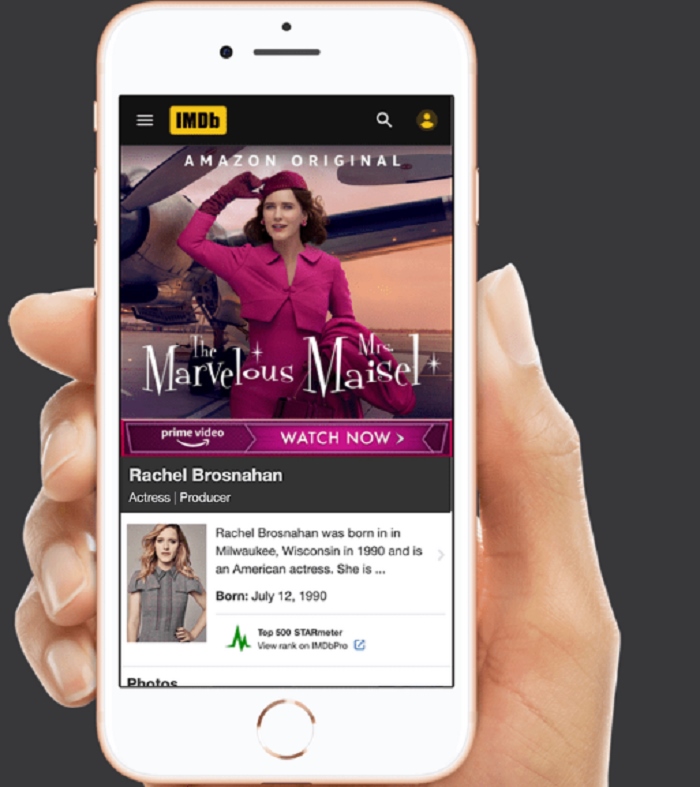
- This banner ad for “The Marvelous Mrs. Maisel” is a good example because it reaches the right audience. It is most likely that people who visit IMDb already have interest in movies and TV shows, so they are more ready to respond with streaming advertisements. The ad stands out on a popular entertainment site so it is more likely to grab attention and get results.
Video Ads
- Definition: Short and engaging commercials that promote apps, products, or services.
- Impact: Video ads tend to deliver dynamic, attention-grabbing experiences, highly effective for user engagement.
- Best Practice:
- Keep video ads between 6-15 seconds for maximum impact.
- Make sure the ads have a clear message that is easily understood by users within the first 3 seconds.
- Types of Video Ads:
- Non-Rewarded Video Ads: Play automatically between app content (for example ads between game levels or before video content).
- Rewarded Video Ads: Users will watch videos in exchange for in-app rewards (more details below).
- Benefits:
- Brand storytelling: Engaging users with immersive ad experiences.
- High conversion rates: Users remember and act on video content.
- Driving app installs and purchases: Effective for game and e-commerce apps.
- Example:
- Samsung video ads on Instagram Feed are placed directly into a user’s feed, appearing in between content as they scroll. This organic placement followed by an interesting and engaging video ads format will boost customers’ engagement.

Rewarded Ads
- Definition: Type of ads where users make a conscious decision to watch a certain ads in exchange for in-app rewards.
- Typical Use Cases: Best suited for gaming and entertainment apps.
- Rewards Examples:
- Extra game lives
- In-game currency
- Premium content access
- Benefits:
- Higher engagement & retention: Users willing to interact with ads.
- Improved user experience: Ads feel like a value exchange rather than an interruption.
- Increased revenue: More user engagement leads to higher ad earnings.
- Example:
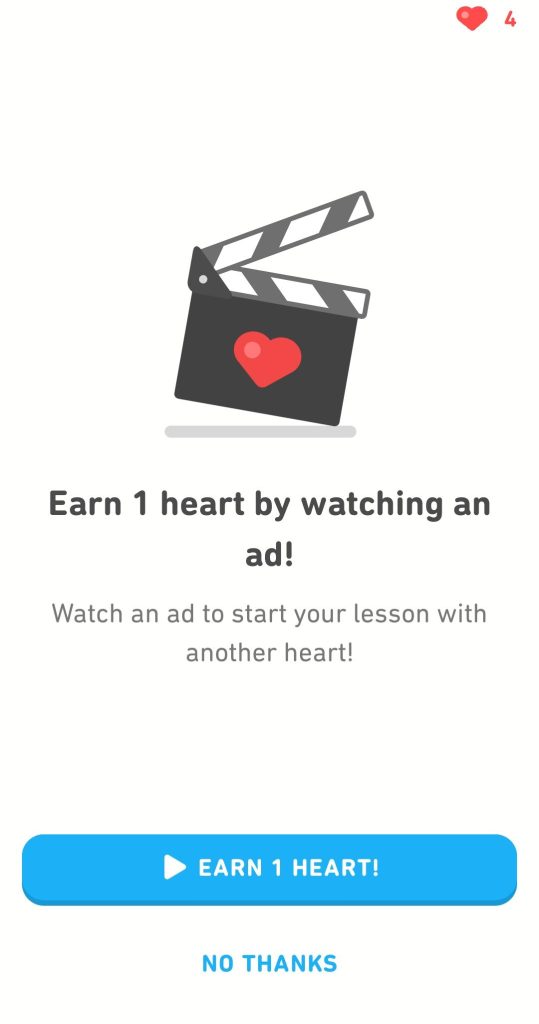
- Duolingo lets users watch video ads before or after a lesson to earn extra hearts.
Native Ads
- Definition: Ads that seamlessly blend into an app’s design.
- Key Features:
- Match the app’s look and feel.
- Ads will feel like a natural part of the app experience, instead of intrusive pop-ups that interrupt the user.
- Benefits:
- Higher user trust: Ads feel natural, leading to better engagement.
- Less ad fatigue: Users don’t feel like they’re being aggressively marketed to.
- Improved CTR (Click-Through Rate): People interact with native ads more than traditional banners.
- Example:
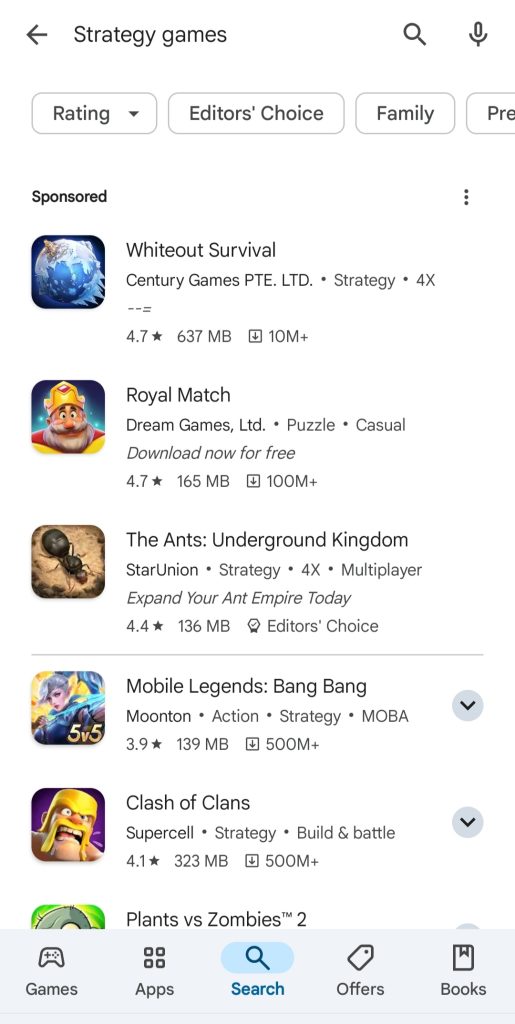
- Sponsored mobile game apps appear in users’ feeds in Google Play Store just like organic content, making them blend naturally while still standing out.
Rich Media Ads
- Definition: Interactive advertisements that encourage user participation.
- Interactive Elements:
- Swiping
- Shaking
- Tapping
- Gamified experiences
- Interactive product trials
- AR filters
- Benefit:
- High engagement rates: Users interact with the ad and increase retention.
- Memorable brand experiences: Gamified elements make ads stand out.
- Boosting conversion rates: Users are more likely to engage with a fun ad.
- Example:
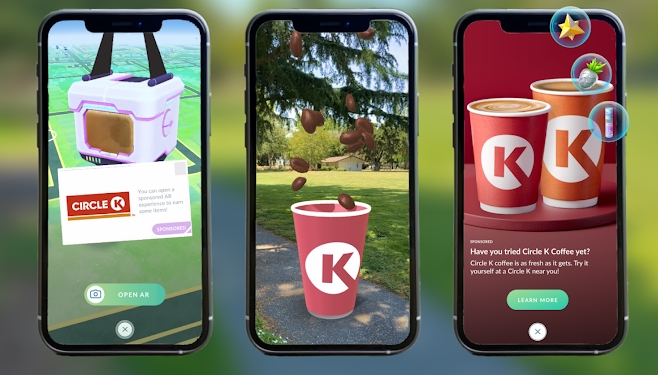
- Circle K, a convenience retailer, uses Niantic’s Rewarded AR ads to increase brand awareness and product consideration for its new coffee offering.
- The Rewarded AR ad at Circle K appeared as a floating balloon in Pokémon GO. Players need to tap on it to open their camera and interact with a 3D Circle K coffee cup in augmented reality. The campaign directed participating users to claim their physical coffee cups at local Circle K stores.
Offerwalls
- Definition: In-app mini-stores where users complete tasks for in-app rewards.
- Task Examples:
- Surveys
- App downloads
- Watching ads
- Benefits:
- Monetizing non-paying users: It helps generate revenue from users who wouldn’t otherwise make purchases.
- Driving engagement: Users are motivated to interact with different offers.
- Providing alternative in-app purchases: A great way to reward users without forcing them to buy.
- Example: Mistplay & Tapjoy Offerwalls
- Mobile gaming apps allow users to complete tasks in exchange for in-game currency or premium features.
How to Implement In-App Ads
Businesses can generate revenue from their app by using strategic in app advertising. But it is worth noting that if there are too many bad ads, there’s a chance people will stop using the app. That’s why it’s important to use in-app advertising wisely.
Here are the essential steps to effectively integrate in-app ads and best practices to optimize performance.
Steps for Integrating In-App Ads
1. Choose the Right Ad Formats for Your App’s Audience
In-app ads are not one size fits all solution, meaning mobile app developers need to choose the right ad format that is suitable for their mobile apps.
The key is to choose ad placements that increase engagement, rather than disrupt the user experience.
Always consider how the ad format fits into the natural app experiences. If it feels forced or intrusive, users are more likely to close your app. Here are some perfect matches that you can try:
- Gaming apps: Rewarded ads and offerwalls work well because users are willing to engage with ads to earn in-game rewards.
- News and content apps: Native ads and banner ads blend seamlessly with the app’s layout.
- E-commerce and shopping apps: Rich media ads and video ads can showcase products in an engaging way.
2. Partner with Reputable Ad Networks
Ad networks can connect advertisers and publishers, helping developers monetize their apps efficiently. A trusted ad network provides:
- Better ad quality
- Higher payouts
- Reliable tracking tools
Here are some of the top in-app ad networks to consider:
- Google AdMob: Best for wide reach and high fill rates.
- Meta Audience Network: Ideal for apps with strong social interactions.
- Tyrads: Focuses on all in one offerwall solution for monetization.
3. Test Ad Placement to Maximize Visibility Without Disrupting User Experience
Ads placement is as important as the ads content itself. Meaning poorly placed ads will only annoy users and lead to uninstalls, while strategic placement can increase engagement and revenue.
Best Placement Strategies by Ad Type:
- Banner ads: Place them at the bottom of the screen so they don’t cover up content.
- Native ads: Integrate them into your content feed or between levels in games.
- Rewarded ads: Activate ads in between moments (for example, after completing a level or when users need an extra life).
- Video ads: Use interstitial video ads sparingly, such as between game levels or after articles.
4. Use Advanced Analytics to Track Performance and Optimize Strategies
Tracking and analytics show you which ads are effective and which ones are not. Analyze the data to see what works best. Use data-driven insights to optimize ad placement, format, and frequency.
Key Metrics to Track:
- eCPM (Effective Cost Per Mille): Measures ad revenue per 1,000 impressions.
- CTR (Click-Through Rate): Shows how engaging an ad is.
- Retention Rate: Tracks whether users stay in your app after viewing an ad.
- Fill Rate: The percentage of ad requests that result in an actual ad view.
Best Practices for In-App Advertising
Follow these best practices to ensure a seamless user experience while maximizing revenue:
1. Balance Ad Frequency to Prevent User Fatigue
Showing too many ads can cause users fatigue towards your mobile apps, leading to higher bounce rates and uninstalls applications. On the other hand, showing too few ads may result in lower revenue.
How to balance ad frequency:
- Limit interstitial ads to once per session or between major app interactions.
- Allow users to skip video ads after a few seconds to reduce frustration.
- Use rewarded ads periodically, so they feel valuable rather than repetitive.
- Monitor retention rates to ensure users aren’t leaving due to excessive ads.
2. Maintain Relevance with Personalized Ads
Ads perform better when they match with users interests. Personalize your ads to increase engagement, click-through rates, and conversions.
How to personalize ads effectively:
- Use user data (age, location, users behavior, preferences) to create targeted ads.
- Implement contextual advertising (for example: showing fitness-related ads in a health app).
- Use AI and machine learning to optimize ad delivery based on past interactions.
3. A/B Test Ad Creatives for Better Performance
Not all ads will resonate with your audience, so testing different creatives is key to finding high-performing ads.
How to A/B test ads:
- Create multiple ad variations (different images, text, colors, or calls to action).
- Test them on a small audience segment before rolling out to all users.
- Analyze CTR, engagement, and conversion rates to determine the best ad creative.
Challenges of In-App Advertising and How to Overcome Them
In-app advertising is a great way to generate income for mobile apps, but it comes with challenges that can impact user experience, engagement, and revenue potential. Below are the most common challenges and effective solutions to overcome them.
User Fatigue
Users often become frustrated when they see too many ads or if the ads feel repetitive and intrusive. This can lead to higher bounce rates, lower retention, and app uninstalls.
How to Overcome It:
- Limit Ad Frequency: Avoid giving users with too many ads in a short period of time. Implement frequency capping to control how often ads appear per session.
- Use Rewarded Ads: Instead of forcing ads on users, offer rewarded video ads that provide in-app incentives. These ads feel more like a value exchange than an interruption.
- Diversify Ad Formats: Mix native ads, interstitial ads, and rich media ads to prevent users from seeing the same ad format repeatedly.
- Optimize Placement: Place ads strategically where they won’t interfere with the user’s natural app flow. For example, showing ads between game levels instead of mid-game prevents frustration.
Ad Blocking
Many users install ad blockers to avoid intrusive ads. This can lead to lost revenue opportunities for app developers.
How to Overcome It:
- Implement Native Ads: Since native ads blend seamlessly with app content, they are less likely to be blocked or ignored by users.
- Use Contextually Relevant Ads: When there’s a relation between ads and user interests, users are more likely to engage instead of blocking them.
- Provide an Ad-Free Subscription Option: Some apps offer users the choice to pay a small fee to remove ads, ensuring revenue from users who dislike ads.
- Use First-Party Data: Ad blockers block tracking. But first-party data, like in-app behavior, helps deliver relevant ads. This improves targeting without relying on third-party cookies.
Low-Quality Ads
Low-quality ads can have a negative impact towards user experience and app credibility. Ads that are misleading, offensive, or irrelevant can frustrate users and cause app abandonment.
How to Overcome It:
- Work with Premium Ad Networks: Partner with Google AdMob and TyrAds to ensure high-quality ad content.
- Enable Ad Quality Controls: Many ad networks allow filtering out inappropriate or irrelevant ads.
- Use Contextually Relevant Ads: Ads should be relevant with user behavior and app content. For example, a fitness app should serve health-related ads rather than irrelevant game ads.
- Regularly Review Ad Creatives: Monitor and block low-performing or inappropriate ads that negatively affect user experience.
Measurement Issues
Tracking the effectiveness of in-app ads can be quite a challenge, especially with the rise of privacy-first frameworks such as Apple’s App Tracking Transparency. Without proper measurement, developers may find it difficult to optimize ad performance and maximize revenue.
How to Overcome It:
- Use Mobile Measurement Partners (MMPs): MMPs can help track ad performance, attribution, and user behavior accurately.
- Implement Conversion Tracking: Set up conversion tracking within the app to monitor specific user actions, such as purchases or sign-ups, to evaluate ad effectiveness.
In-App Advertising Best Practices for Publishers
Monetizing an app requires a balance between maximizing revenue and maintaining a great user experience. Here’s how to do it effectively:
Integrate Ad Seamlessly for a Better User Experience (UX)
How to blend them naturally into the app:
- Use native ads that match your app’s content.
- Place interstitial ads at natural pauses (for example: after game levels).
- Offer rewarded ads to keep users engaged.
Maximize Revenue with Header Bidding
How to maximize revenue:
- Use header bidding to let multiple networks compete for your ad space.
- Optimize bids with platforms like Prebid and Google Open Bidding
Prevent “Ad Fatigue” with Fresh Creatives
Here’s how to do it:
- Rotate creatives regularly & do A/B testing with different ads designs.
- Adapt ads for seasonality, trends, and user preferences. For example, Mixbook, a photo book app, ran seasonal Facebook ads offering a 50% discount during the holiday season. They customized their ad to match the Christmas mood and highlighted holiday photo books. This simple seasonal update attracted both new and returning users.
Test Different Ad Formats for Optimal Performance
Some ways to do it:
- Experiment with banner, rewarded, interstitial, and native ads.
- Use A/B testing to find the best-performing placements.
Monitor Key Performance Metrics
Some metrics to track:
- eCPM (effective Cost Per Mille): eCPM is a metric that represents the revenue an app publisher earns per 1,000 ad impressions. A higher eCPM indicates better ad performance and revenue generation.
- CTR (Click-Through Rate): Tracks the percentage of users who click on your ads. A higher CTR suggests more engaging and relevant ads for your audience.
- Retention Rates: Measures how many users continue to use your app over time. High retention rates indicate user satisfaction and long-term value, which is crucial for sustainable app success and can positively influence ad revenue.
Read: How to Calculate Click Through Rate & Boost Your Traffic
Future Trends in In-App Advertising
In-app advertising is evolving rapidly with emerging technologies and changing privacy regulations. Here’s what we might see in the future:
AI-Driven Ad Personalization
AI enhances targeting by analyzing user behavior and optimizing ad placements in real time. It improves engagement, prevents ad fatigue, and detects fraud.
Rise of Interactive Ads (Playable & AR Ads)
Users prefer engaging ad formats like playable ads (mini game demos) and AR ads (virtual try-ons). These increase engagement and conversions.
Privacy-First Advertising
Stricter privacy regulations like Apple’s ATT and Google’s Privacy Sandbox, prevent advertisers from tracking users across apps without permission. To adapt, advertisers now rely on first-party data (information users willingly share) to deliver relevant ads while respecting privacy.
5G’s Impact on Ad Performance
Faster networks enable high-resolution video, seamless AR/VR ads, and instant in-app shopping experiences without buffering.
Conclusion
In-app advertising is a powerful app monetization strategy that provides developers with high eCPMs, targeted reach, and engaging ad formats. Understanding how in-app advertising works and applying best practices ensure effective monetization while maintaining a positive user experience.
Ready to unlock the full benefits of in-app advertising? Contact TyrAds today and let us help you optimize your ad strategy for maximum growth!