


Acquiring users and generating revenue can be a significant challenge for app developers. High customer acquisition costs and low conversion rates can block business growth.
Traditional marketing strategies are often too expensive and ineffective. Reaching the right audience and convincing them to pay for your app can be a challenging task.
Freemium monetization offers a powerful solution. Freemium monetization is one of the best business models where a product or service offers basic features for free while charging for premium features or upgrades.
This “try before you buy” approach allows users to experience the product’s value firsthand before making a purchase.
Providing a free version, can attract a large user base organically. This not only reduces customer acquisition costs but also allows you to build a strong foundation for revenue growth.
This article will discuss in depth why this business model can make your application popular and profitable.
Advantages of Freemium Monetization
Who doesn’t like free things? These are the advantages of using freemium revenue model:
- Free to Try First: Freemium offers users a chance to immediately try your application without having to spend any money. This is the easiest way to attract many users.
- User Base Growth Potential: A high-quality application will organically attract user and generate positive word-of-mouth promotion.
- Building Trust Before Monetization: After users feel the benefits of your application, it will be easier for them to subscribe to the paid version.
Challenges of Freemium Monetization
While freemium monetization has its benefits, there are also significant challenges that need to be addressed to ensure a sustainable business model:
- Conversion Rates: This is the biggest challenge. Users are becoming too satisfied with the free version and don’t want to switch to the paid version.
- Free vs. Premium Features: If the free features are too complete, users have no reason to pay. On the other hand, if the free features are too minimal, users can get bored and leave your app.
- Operational Costs: Even though it’s free, the application still requires costs for servers, technical support, and development.
Key Strategies for Freemium Success
You need to implement strategies that attract users so they ultimately convert to premium customers in order to monetize freemium.
These strategies combined with effective monetization tactics, can help you maximize revenue and user satisfaction.
Here’s eight key strategies to maximize the success of your freemium revenue model.
Optimize the Value of Your Free Offering
Make sure that the features in your free tier must provide real value, so you can attract users to try your product. Choose key features that are relevant and useful, so users can get a feel for the complete quality of your product.
Although it is important to make sure that your free offering is not too complete, otherwise users have no reason to upgrade to the premium version.
For examples:
- Provide access to core features that support users’ everyday needs, but limit number of uses, duration, or storage space.
- Make sure that the free tier solves users’ main issues, but showcase additional features exclusive to the premium version for a more thorough solution.
- Create an “aha moment” for users on the free tier. The moment they realize the value of your product, they will be motivated to consider upgrading.
Design a Clear Paywall Structure
A paywall is key to converting free users to premium subscribers. Users should easily understand what they’re getting with the premium tier and how it’s different from the free version. Here’s how:
- Use simple comparison charts or tables to explain the feature differences between the free and premium versions.
- Add an in-app notification when users try to access a premium feature, with a message that highlights the benefits of upgrading to one of your subscription models. For example, Spotify displays a message like “Upgrade to Premium to listen ad-free” every time a free user hears an ad.
Personalize the Upgrade Experience
Personalization can increase the chances users will subscribe to the premium version. Optimizing user behavioral data, you can send upgrade calls that are relevant to their specific needs.
Here are some approach you can use:
- Analyze which features your free users use the most, then offer a premium version of that feature with a relevant message.
- Send a notification or email that highlights how premium can help users achieve their goals faster or more efficiently.
Create Urgency with Limited-Time Offers
Urgency is a powerful psychological tool to drive users action. Having a time-limited offer, can motivate users to upgrade to the premium version right away. Use these strategies:
- Offer a special discount for a premium subscription model, but put a time limit on it, such as “Only available for 24 hours!”
- Offer exclusive access to certain features or tools that are only available during the promotion.
- Highlight limited availability, such as “Only 50 spots left,” to create a sense of limitation and encourage faster decision-making.
Leverage Social Proof and Trust Signals
Users are more likely to trust a product that has been proven to be useful to others. Social proof like testimonials, case studies, and statistics can help build trust.
Practical actions like these can be very beneficial:
- Feature positive reviews from premium users on your promotion page.
- Highlight milestones or statistics, such as the number of users who have upgraded to premium.
Continuously Improve the Premium Offering
Regularly upgrade the premium features and content to ensure subscribers perceive ongoing value in their subscription. But don’t forget to also update the free tier to keep it attractive.
Here are the key steps:
- Add new premium features regularly to increase the satisfaction of paying users. For instance, Duolingo offers exclusive content like unlimited hearts and personalized practice that can only be accessed by premium users.
- Update the free features to attract new users and improve user retention in freemium, but avoid adding too many additional features that you lose the incentive to upgrade.
Use Gamification to Increase Engagement
Gamification makes the user experience more fun and interactive. Here’s how you can encourage active users:
- Add a points or rewards system that provides additional incentives to upgrade to premium.
- Use tiered achievements to drive users toward completing higher levels of premium features.
- Introduce challenges or rewards to motivate users to engage more actively with the platform and explore premium features.
Offer Flexible Payment Options
Flexibility in payment options can attract more users to try a premium subscription. Provide a variety of options to suit your needs:
- Offer monthly, yearly, or one-time payments to give users more options. For example, Canva offers a monthly “Pro” plan with the option to cancel at any time.
- Add a free trial for users who want to experience the benefits of premium before committing.
Examples of Successful Freemium Models
A lot of companies have already benefited from the freemium model with effective strategies, and are able to generate large user bases and significant revenue from premium subscriptions.
Here are three successful examples that can be an inspiration for your business.
Spotify: Free Tier with Ads vs. Premium No Ads
Spotify is one of the most well-known examples of a successful freemium model. Providing free access to millions of songs, Spotify has been able to attract users from a wide range of segments.
However, this free experience has strategic limitations designed to encourage users to upgrade to a premium subscription.
Spotify’s Freemium Strategy:
- Free Tier: Users can listen to songs for free, but they can be interrupted by frequent ads. On mobile, free users can only listen to songs in shuffle mode, with no ability to select specific songs.
- Premium Tier: Starting from $5,99 to $19,99 per month, users get an ad-free experience, better audio quality, the ability to download songs for offline listening, and full access to select songs on any device.
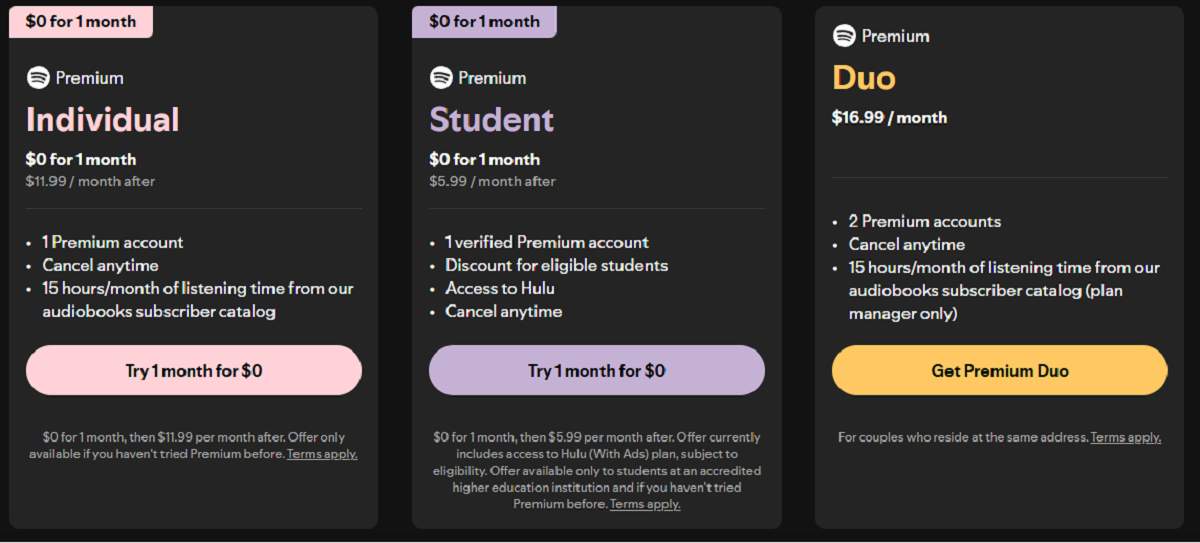
This approach successfully strikes a balance between appeal and limitations. Spotify’s free tier attracts millions of new users each month, while ads on the free version generate additional revenue. However, limitations like intrusive ads and limited features drive users to upgrade to premium.
Keys to Spotify’s success:
- Provide high value in the free version so users feel engaged with the service.
- Present limitations that are intrusive enough to increase the appeal of premium without making the free experience feel too limiting.
Dropbox: Free Account Storage Limits to Drive Upgrades
Dropbox takes a simple but effective approach to its freemium model: limit the storage capacity on free accounts. This strategy leverages users’ need for more space as a motivation to upgrade to a paid account.
Dropbox’s Freemium Strategy:
- Free Tier: Dropbox offers 2GB of free storage, which is enough for small files and personal documents. However, for users who frequently upload large files, such as videos or design projects, this capacity quickly becomes insufficient.
Premium Tier: Users who need more space can upgrade to a premium account with storage capacities ranging from 2TB to 9TB, along with additional features like automatic backups and advanced security.
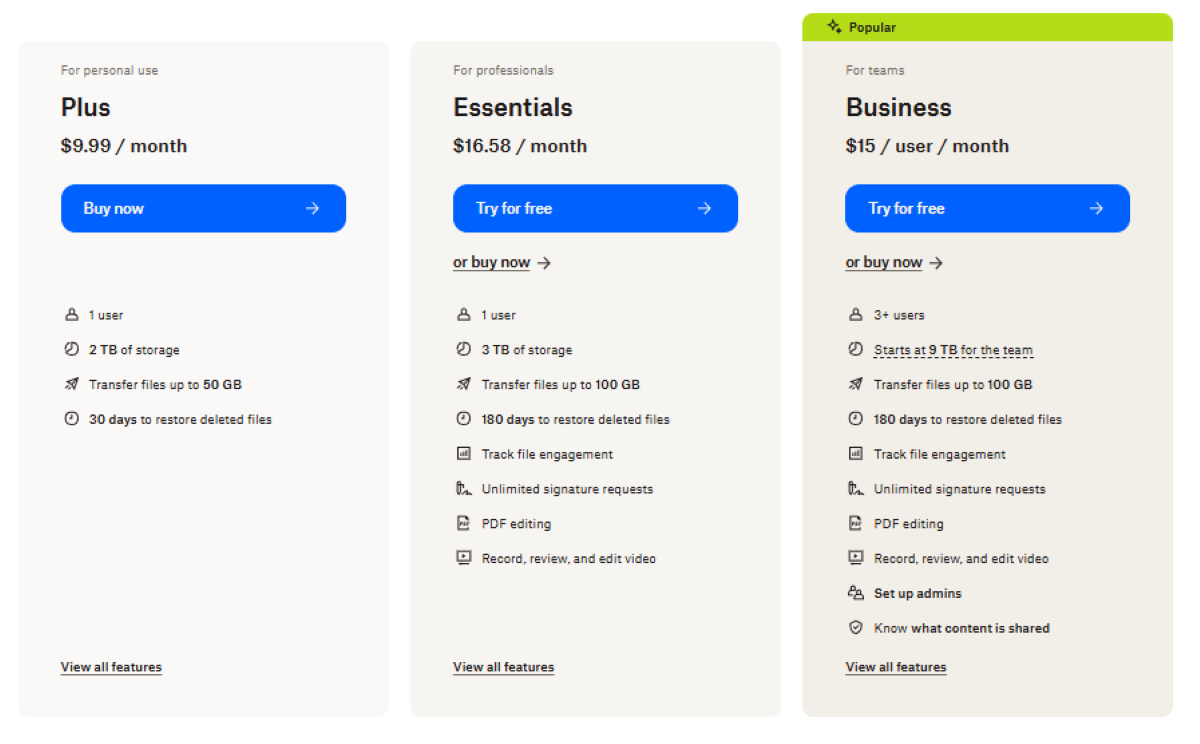
This model has been incredibly successful because it provides a solution to users’ immediate need for more storage. Users often find Dropbox useful on the free version, but when it’s full, they become encouraged to make an upgrade.
Keys to Dropbox’s success:
- Capitalize on users’ essential need for more space to overcome limitations.
- Provide a free experience that’s good enough to build loyalty before users feel the need to pay.
Zoom: Free to Use with Time Limits to Encourage Subscriptions
Zoom saw a huge surge in popularity during the COVID-19 pandemic, and its freemium model is one of the main reasons behind its success.
Simply by making video calling free, Zoom made it easy for users to try it out, while adding strategic limitations to encourage premium subscriptions.
Zoom’s Freemium Strategy:
- Free Tier: Users can host meetings up to 40 minutes long with up to 100 participants. This feature is enough for personal or small meetings. However, the 40-minute time limit is a hinderer for users who need longer meetings.
Premium Tiers: Zoom offers several paid plans that allow for unlimited meetings, larger participant capacity, cloud recordings, and additional features like analytics reporting.
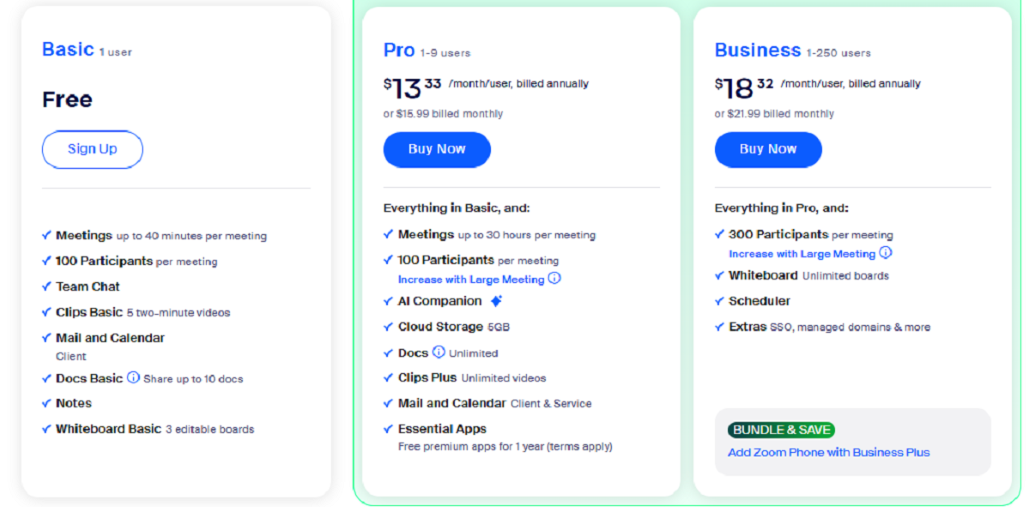
This strategy attracted millions of new users looking for an easy-to-use online meeting solution. When free users started using Zoom for business or education, the 40-minute time limit often forced them to upgrade to the premium version.
Keys to Zoom’s success:
- Targeting users’ immediate need (remote communication) by offering a free solution.
- Optimizing the prominent time limit to encourage upgrades, without compromising the core benefits of the free version.
Conclusion
The freemium monetization model has proven itself as an effective strategy for attracting new users, building loyalty, and creating a sustainable revenue stream.
Providing free access to main features, allow your business to attract a broad user base, while offering paid upgrades to create significant added value for those who need more.
This approach maximizes user acquisition and also opens up opportunities to build long-term, mutually beneficial relationships between your business and customers.
It’s important to understand users’ needs, design a strategic free offering, and provide strong incentives to upgrade to premium.
Using the right approach, the freemium model can become an effective monetization tactic for user acquisition and a solid foundation for your business growth.Visit TyrAds website for more information about freemium monetization. Contract us now and get the best offer for your business.