


Want to maximize your marketing ROI and reach a wider audience? Cross-promotion is your answer! It offers a cost-effective and efficient way to expand your reach to achieve remarkable results.
That’s why cross-promotion is becoming an important strategy in modern marketing. Think of accessing a whole new pool of potential customers without drastically increasing your marketing budget. Partnering with others helps you connect with a larger audience and increase your brand recognition.
Explore this article to learn about the best cross-promotion examples and strategies you can implement in 2025.
What Is Cross-Promotion?
Cross-promotion is a collaborative marketing strategy where businesses join forces to promote their products or services to each other’s existing audiences to achieve mutual benefits. It is a powerful tool because it allows companies to:
- Reduce marketing costs by sharing expenses.
- Expand their audience reach through collaboration.
- Strengthen brand credibility by association with trusted partners.
Cross-promotion can take various forms, including product collaborations, co-hosted events, and referral programs. The key is to find the right partners whose brand values and target audience align with yours.
The Top Cross-Promotion Examples
Cross-promotion is an effective way for brands to expand their reach, reduce marketing costs, and build long-term partnerships. Here are some of the best cross-promotion strategies with real-world examples.
1. Co-Branded Product Collaborations
Example: Apple Watch Nike+
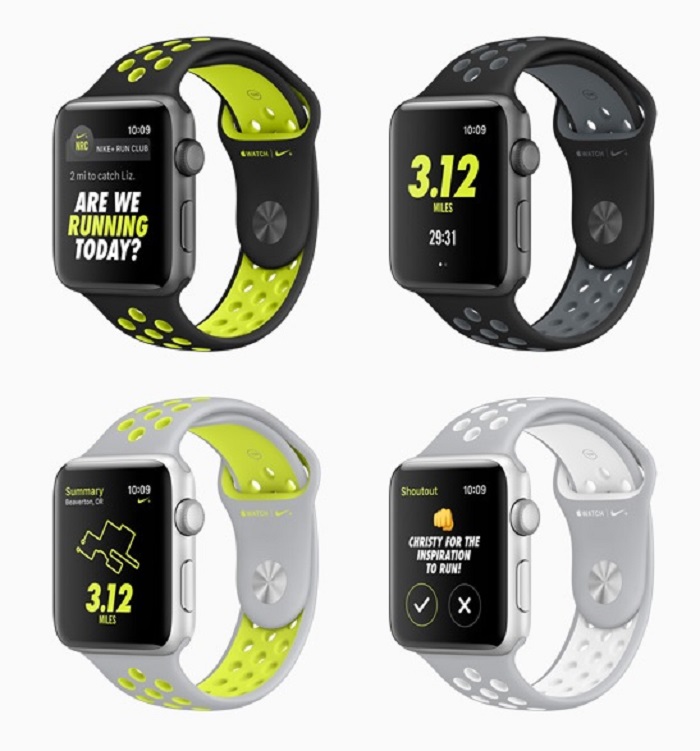
Apple and Nike partnered to create the Apple Watch Nike+, a smartwatch designed specifically for fitness enthusiasts. Combining Apple’s cutting-edge technology with Nike’s strong brand presence in the athletic & sports community, they successfully captured both tech-savvy users and active consumers.
Why It Works
- Apple benefits by reaching fitness-conscious customers who may not have considered an Apple Watch before.
- Nike gains exposure to Apple’s massive customer base, encouraging them to use the Nike Run Club app.
- Both brands strengthen their positioning in their respective industries while offering a unique product.
A successful cross-promotion depends on shared customer interests. This focus ensures both partners benefit, creating engaging campaigns, maximizing impact, and achieving a win-win solution.
2. Social Media Giveaways
Example: Fabletics and Bliss Instagram Campaign
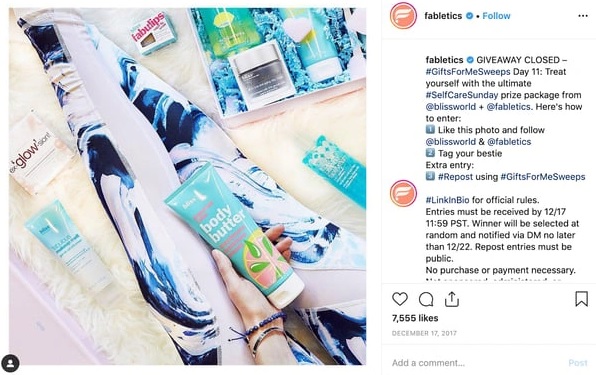
Fabletics (an activewear brand) partnered with Bliss (a skincare brand) for an Instagram giveaway that encouraged users to follow both accounts, like posts, and tag friends for a chance to win a prize package.
Why It Works
- Both brands target a health-conscious, self-care-focused audience.
- Giveaways generate excitement and encourage social sharing.
- Followers from one brand discover each other’s products thus expanding reach.
Tips for Running Effective Giveaways
- Set clear entry rules (e.g., follow, like, tag a friend).
- Choose complementary brands to maximize audience overlap.
- Promote through Instagram Stories, posts, and influencer collaborations.
- Use a dedicated hashtag to track engagement.
3. Joint Content Creation
Example: The Chat Shop and Live Chat’s Co-Authored E-Book
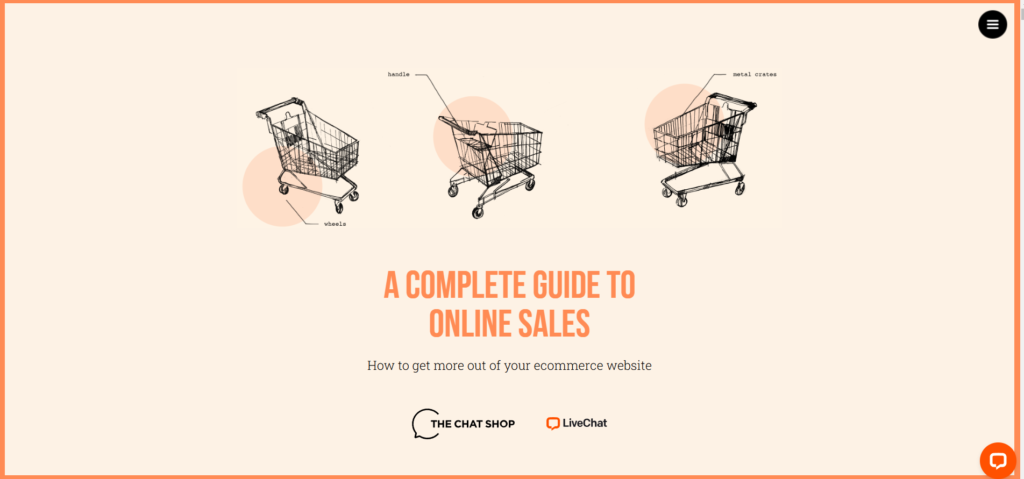
These two companies collaborated on an e-book focused on customer engagement strategies, using their combined expertise to educate businesses about live chat services.
Benefits of Joint Content Creation
- Enhanced Credibility: When two industry leaders create content together, it boosts trust.
- SEO Improvement: Shared backlinks and traffic improve search engine rankings.
- Audience Education: High-value content helps convert leads into customers.
Other Examples
- Co-hosted podcasts featuring expert discussions, such as the “How B2B Podcasts Grow Up” series hosted by Casted CEO Lindsay Tjepkema, featuring podcast veterans and experts from Salesforce and HubSpot.
- Blog post exchanges between brands with overlapping audiences, such as Moz, an SEO software company, and Buffer, a social media management platform. Moz has published articles from Buffer on social media strategies, and Buffer has featured Moz’s expertise on SEO best practices.
- YouTube collaborations between GoPro and Red Bull Media House. Their joint efforts, showcased on both companies’ channels, have amplified Red Bull’s presence in extreme sports and strengthen GoPro’s status as the camera for adventurers.
4. Product Bundling Deals
Retailers use co-branded campaigns, such as discounted product bundles, to increase sales and enhance customer satisfaction.
Example: Complementary Product Discounts
Zero1 and OPPO offer a co-branded bundle that pairs OPPO smartphones with Zero1’s Z-One 4G Plan. This partnership benefits Zero1 by attracting new subscribers, increasing brand exposure, and potentially retaining customers beyond the three-month plan.
OPPO gains increased sales appeal, access to Zero1’s user base, and an enhanced customer experience with an included mobile plan.

Why It Works
- Encourages impulse purchases.
- Provides added value to customers.
- Increases sales for both brands while improving customer retention.
The success of product bundles depends on the well coordinated integration of the included items. Just make sure that the bundled products genuinely complement each other and provide added value beyond the individual products.
5. Influencer Partnerships
Influencers act as brand ambassadors. They can help businesses tap into niche audiences that align with their target customers.
Why It Works
- Influencers already have an engaged audience that trusts their recommendations.
- Brands gain access to a built-in community without having to build it from scratch.
- Influencers can introduce cross-promotional content in an organic, relatable way.
Example: Partnership between Kayla Itsines (Co-Founder of SWEAT App) and Powerade Active Water. Powerade gains credibility, increased brand awareness, and product engagement through Kayla’s trusted influence. Kayla and the SWEAT App attract new users with the free subscription offer.
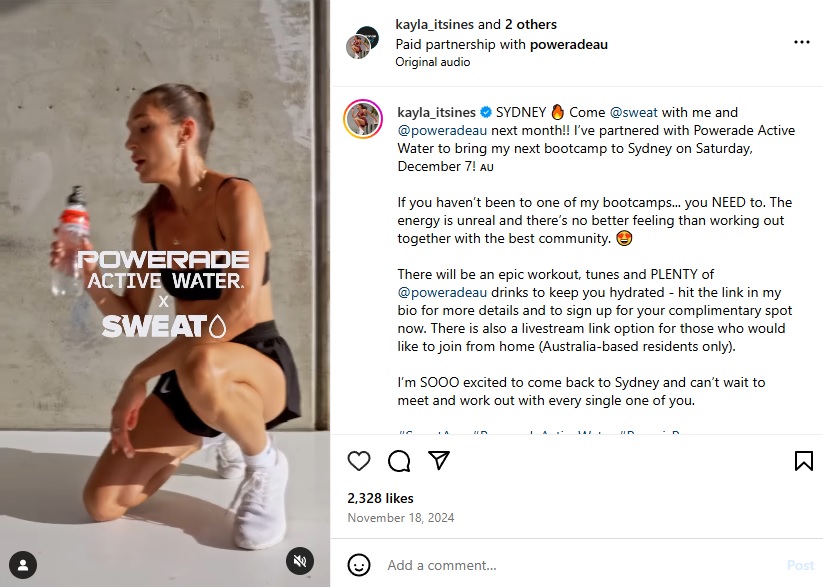
Make sure to choose influencers whose audience resonates with both brands involved in the promotion. For example, fitness influencers promote both a sports drink brand and a workout app in the same post, encouraging followers to try both products together.
6. Collaborative Events and Webinars
Brands in the same industry often collaborate on live events, workshops, or online webinars to share expertise and attract customers. For example:
- Promote the event across all partner channels.
- Offer incentives like free downloads or discounts for attendees.
- Record and repurpose content for later use.
Example: Co-Hosted Workshops or Industry Panels
Salesforce, a cloud-based software company partnering with The Bridge Group, a sales strategy consulting company co-hosted a webinar on “Simple Productivity Strategies for Sales Executives”.
Why It Works
- Builds industry authority and credibility.
- Engages a live audience, fostering direct interaction.
- Provides valuable content while generating leads.
7. Cross-Promotional Displays in Stores or Online
Physical stores and online retailers often display or promote complementary products from partner brands.
Example: Retail and E-commerce Showcasing Each Other’s Products
An e-commerce site offering a gaming mouse in “Frequently bought together” section when customers buy gaming headset.
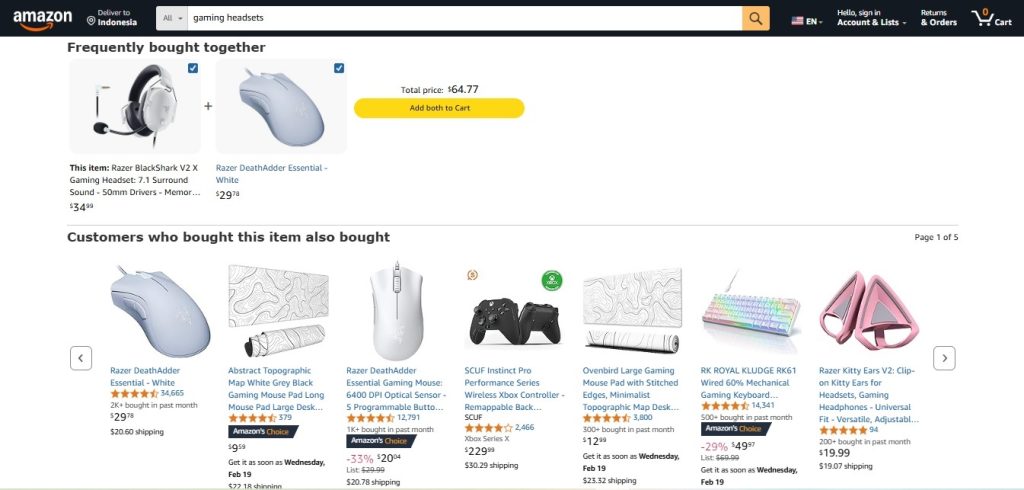
It’s important to check for brand consistency to maintain clear messaging and avoid confusing customers. A well-coordinated brand promotion will create a positive experience for your customers.
8. Referral Programs
Referral programs reward customers for bringing in new buyers. This often leads to increased customer acquisition.
Example: Mutual Referral Systems Between Brands
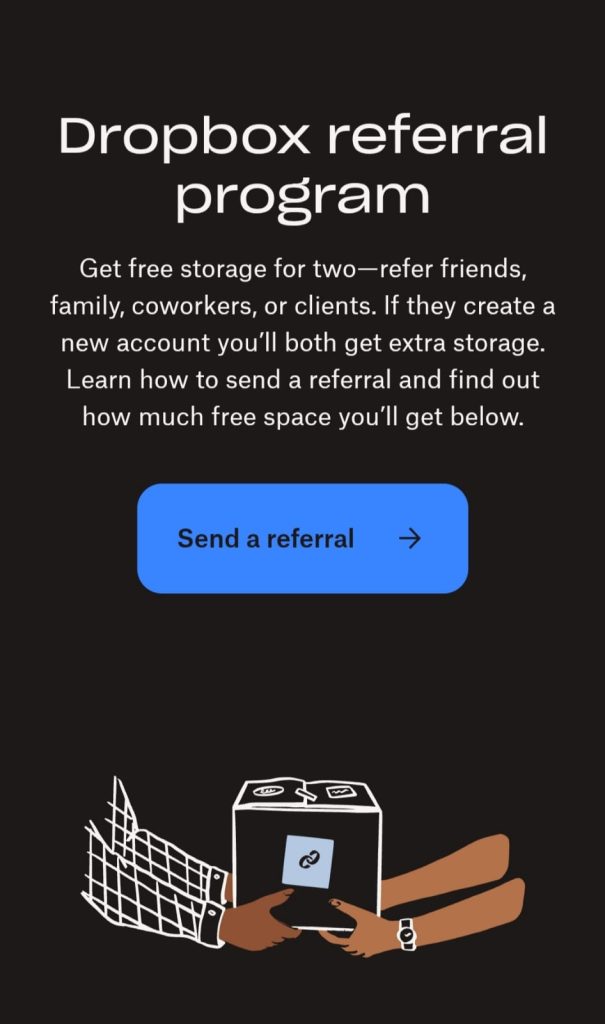
A cloud storage company (Dropbox) partnering with a cybersecurity firm. When a customer signs up for one service, they receive a discount or bonus for signing up for the other.
Benefits
- Encourages word-of-mouth marketing.
- Builds long-term brand loyalty.
- Creates a cost-effective way to acquire new customers.
9. Co-Sponsored Advertisements
How It Works
Two or more brands share advertising costs to maximize exposure while reducing expenses.
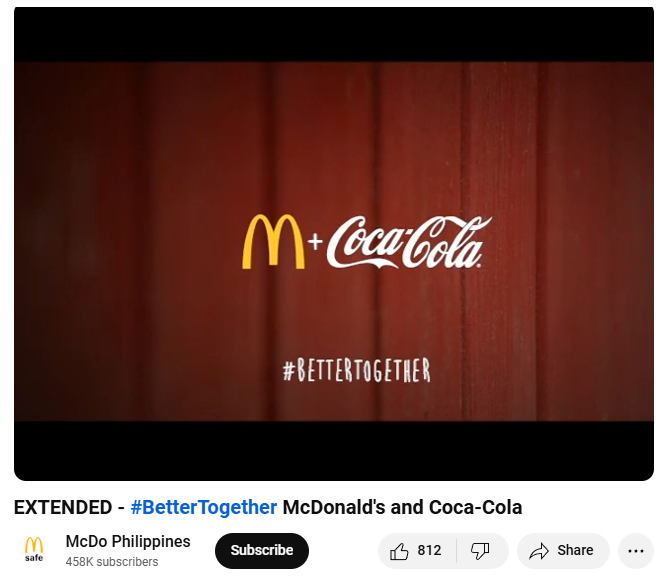
Example: Joint commercials of Mcdonald’s and Coca Cola where both brands are highlighted in a cohesive storyline.
- Doubles audience reach without doubling the budget.
- Creates a stronger, unified message by combining branding efforts.
- Helps build credibility through association with a reputable brand.
10. Guest Blogging for SEO
Guest blogging allows brands to exchange high-value content, increase traffic and improve search engine rankings.
Example
- A fitness coach writing a guest article for a health supplement brand’s website, sharing workout tips that complement their product.
- A cybersecurity firm writing an article for a cloud storage provider, educating readers on safe data management practices.
Benefits
- Gains Backlinks: Improves SEO rankings and drives traffic.
- Builds Thought Leadership: Positions brands as industry experts.
- Expands Audience Reach: Introduces content to a new customer base.
Benefits of Cross-Promotion
Cross-promotion offers plenty of benefits for businesses willing to collaborate. It can be a powerful strategy for growth. Here are some of the benefits of cross-promotion:
- Increased Brand Visibility: Partnering with another company exposes your brand to a wider audience. Increased visibility can lead to greater brand awareness and recognition.
- Cost-Sharing Advantages: Cross-promotion allows you to combine resources with a partner, reducing marketing cost for both parties. This can free up budget for other initiatives.
- Boosted Credibility: If customers trust your partner, that trust can be transferred to your brand through this partnership or join campaign. This “halo effect” can improve your brand image.
- Access to New Customers: Allows you to reach potential customers who may not have been aware of your brand beforehand, opening up for a new market growth and revenue.
How to Implement Cross-Promotion Successfully
Cross-promotion can be a game-changer for businesses, but its success depends on careful planning and execution. Here’s a step-by-step guide on how to cross-promotion your brand.
1. Define Clear Goals
Before launching a cross-promotional campaign, it’s essential to establish clear and measurable objectives.
Key Metrics to Track
- Website Traffic: Measure if your campaign is driving new visitors.
- Social Media Engagement: Track metrics likes, shares, comments, and follower growth.
- Lead Generation: Monitor sign-ups, downloads, or email subscribers gained.
- Sales Conversions: Determine if the promotion leads to increased purchases.
- Brand Awareness: Use surveys or brand mentions to assess recognition growth.
Example Goal: If your goal is to increase sales, set a specific target like “boost online sales by 20% over three months through a cross-promotion campaign with a complementary brand.”
Read: 10+ Important Mobile App Marketing KPIs and Metrics
2. Choose the Right Partner
Selecting the right partner is crucial for a successful cross-promotion.
Factors to Consider When Choosing a Partner
- Shared Audience: Ensure your target customers overlap for maximum impact.
- Brand Alignment: The partner’s values, tone, and messaging should complement yours.
- Complementary Products or Services: Ideal partners should offer products that enhance, rather than compete with, your own.
- Mutual Benefit: Both brands should gain something valuable from the partnership (e.g., increased exposure, leads, or credibility).
- Engagement and Reputation: Assess the brand’s online presence, customer engagement, and industry reputation before partnering.
Example: A fitness apparel brand partnering with a nutrition supplement company makes sense because their target audiences have similar interests in health and wellness.
Read: Mobile App Partnerships: Strategies for Success in 2025
3. Plan Collaborative Campaigns
Once you’ve selected the right partner, the next step is to develop a well-structured promotional campaign.
Best Practices for Planning a Cross-Promotion Campaign
- Decide on the Promotion Format: Choose a cross-promotional method that fits your goals (e.g., social media giveaways, bundled deals, co-hosted events).
- Define Roles and Responsibilities: Assign clear role and responsibility for each aspect of the campaign, such as content creation, social media posting, or email marketing.
- Create a Unified Brand Message: Ensure the campaign’s messaging aligns with both brands’ values and tone.
Use the Right Tools and Platforms
- Project Management Tools: Trello, Asana, or Monday.com for smooth collaboration.
- Design Tools: Canva or Adobe Creative Cloud for co-branded visuals.
- Social Media Scheduling: Buffer or Hootsuite for coordinated posts.
- Analytics & Tracking: Google Analytics, Facebook Insights, or UTM tracking to measure impact.
- Develop a Promotional Timeline: Map out key dates for content releases, engagement checkpoints, and performance evaluations.
- Allocate Budget & Resources: Decide whether the campaign requires paid ads, influencer sponsorships, or promotional incentives.
Example: If two brands are running a co-branded giveaway, thoroughly coordinate posting schedules, determine who provides the presents, and agree on how winners will be selected and announced.
Read: App Monetization Trends in 2025: A Complete Guide
4. Track and Optimize Performance
Monitoring your cross-promotion campaign in real-time to ensure it delivers the expected results.
How to Track Performance
- Use UTM Links: Create trackable URLs with UTM parameters to see which partner-generated traffic performs best.
- Monitor Engagement Metrics: Check social media shares, comments, and mentions.
- Analyze Conversion Rates: See how many users took action after seeing the promotion.
- Gather Customer Feedback: Conduct surveys to understand how customers perceive the campaign.
Optimization Strategies
- Adjust Content Strategy: If engagement is low, revise the copywriting, visuals, or call-to-action phrases.
- Change Promotion Channels: If one platform is underperforming, shift focus to higher-performing ones.
- Test and Iterate: Run A/B tests to refine offers, headlines, and ad creatives for better results.
Example: If an influencer-driven campaign isn’t generating expected conversions, you may choose to rework the copywriting or collaborate with a different influencer who has a more engaged audience.
Read: What is Performance Marketing? A Complete Guide
Frequently Asked Questions (FAQs)
Q: What is cross-promotion?
Cross-promotion is a marketing strategy where two or more businesses collaborate to promote each other’s products or services.
Q: What industries benefit most from cross-promotion?
Retail, tech, beauty, fitness, and SaaS industries see the greatest impact.
Q: How do I find the right partner for cross-promotion?
Look for brands that share similar values, audience demographics, and business objectives.
Q: Can cross-promotion work for small businesses?
Absolutely! Small businesses can take the benefit of partnerships through social media collaborations, joint giveaways, and referral programs.
Conclusion
Cross-promotion is a powerful, cost-effective marketing strategy that can help you expand your business reach, enhance brand credibility, and drive sales through strategic partnerships.
Brands need innovative ways to connect with new audiences, and cross-promotion offers a win-win solution by optimizing shared resources and marketing efforts.
Whether you’re a startup or an established brand, cross-promotion can be a game-changer for your business. You can create meaningful, long-lasting relationships that drive success in 2025 and beyond by embracing strategic partnerships.
Are you ready to take your marketing efforts to the next level? Contact TyrAds now for more information about cross promotion!