


Struggling to keep your business growth profitable? Understanding the average Customer Acquisition Cost for eCommerce is key to long-term success.
Every industry has a different CAC benchmark, and e-commerce is no exception. According to research from Simplicity DX, CAC in e-commerce has risen significantly.
The average Customer Acquisition Cost for eCommerce was only $9 in 2009. However, by 2022, it had increased by 222% to $29.
So, what is the biggest contributor to this cost? Turns out, the highest cost happens during creating and executing content for ads on social media.
Take Alibaba, for example. This Chinese eCommerce giant spends up to 477 Yuan (around 65,90 USD) per new customer, and most for paid ads.
If Alibaba does not manage the rise of its customer acquisition cost (CAC) with a higher customer retention (CLV), then it will severely reduce a business’s Return on Investment (ROI).
So, how can you control CAC without compromising customer acquisition in eCommerce? In this article, we’ll take a deep dive into this issue.
We’ll explore the key factors influencing CAC, industry benchmarks, and proven strategies to lower CAC while still growing your customer base.
What Is Customer Acquisition Cost (CAC)?
Customer acquisition cost is the total amount of money spent by a business (in this case, eCommerce) to acquire new customers.
This metric is crucial for ROI calculations, marketing cost efficiency, and evaluating the company’s long-term scalability.
Therefore, businesses need to calculate Customer Acquisition Cost (CAC) carefully. Here are the formula you should use:
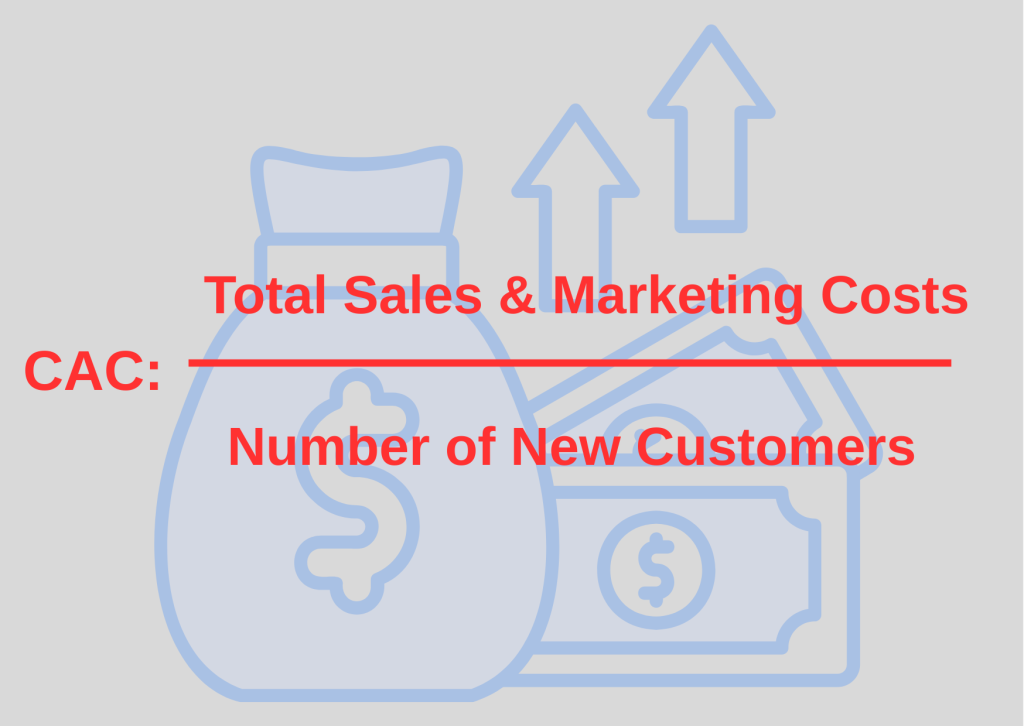
The total cost of sales and marketing is comprised of the following items:
- Digital ads (Google Ads, Facebook Ads, Instagram Ads, TikTok Ads, etc.)
- Influencer & affiliate marketing costs
- SEO & content marketing expenses
- Salaries & incentives for the marketing and sales team
- Training and team development expenses
- Marketing tools (CRM, email marketing, social media management software)
- Public relations (PR) & media placement
- Branding materials (website, graphic design, promotional videos, marketplace fees)
The costs above essentially show how much money a business spends overall to acquire new customers in a specific time.
In the meantime, new customers are either free users or first-time purchasers who become paying customers in the same time frame. Now let’s see a calculation example.
Princess Diamond, a jewelry store with an online marketplace presence, calculates its total sales and marketing costs for a specific period as follows:
| Expense Category | Cost ($) |
| Digital Ads (Google, Instagram, TikTok) | 1,500 |
| Influencer & Affiliate Marketing | 700 |
| SEO & Content Marketing | 350 |
| Salaries & Incentives | 2,000 |
| Team Training & Development | 5,000 |
| Marketing Tools | 1,000 |
| Public Relations (PR) & Media Placement | 500 |
| Branding Materials | 100 |
| Total Sales & Marketing Cost | $10,750 |
During the same period, Princess Diamond acquired 500 new customers who made transactions.
So now you may wonder whether the CAC value above is considered the ideal average CAC for eCommerce? The answer depends on several key factors.
To determine the right CAC, you must also consider other metrics, such as new customer targets, Customer Lifetime Value (LTV), Return on Investment (ROI), and Return on Ad Spend (ROAS).
We’ll break down these factors in the next section.
Why is CAC Important for eCommerce Businesses?
Accurate calculation and effective control of Customer Acquisition Cost (CAC) become a great key aspects for boosting Return on Investment (ROI) and scaling business growth. These key aspects include:
- Measuring Marketing Effectiveness: When CAC is increasing but customer acquisition remains low, businesses must refine their marketing strategy to improve efficiency.
- Assessing Long-Term ROI: Companies compare CAC and customer retention to ensure profitability.
- Controlling Expenses: Businesses must continuously acquire new customers while keeping CAC low to protect profit margins and scalability.
- Measuring Competitiveness: A strong CAC-to-CLV ratio indicates competitive strength and sustainable customer acquisition in the industry. The ideal ratio should be at least 1:3 to ensure strong competitiveness and maximize ROI.
The Customer Acquisition Cost (CAC) directly impacts profit margins and business growth. If CAC is too high, it reduces profitability, limits scalability, and increases reliance on external funding.
On the other hand, a very low CAC could signal that the company is failing to capitalize on marketing potential and limiting its customer acquisition.
Here’s how poor CAC management can negatively affect profitability and business growth:
- Profit Decline
- When CAC exceeds the revenue generated from a customer, profit margins shrink.
- A low profit margin limits business growth and innovation.
- Slower Business Growth
- Rising CAC will drive up funding needs, which directly limits the company’s ability to scale.
- Allocating excessive funds to customer acquisition can cause stagnation or even financial losses.
- Increased Dependence on External Capital
- High CAC forces businesses to rely on external funding, leading to potential debt risks.
- Without strong customer retention (CLV), investors may hesitate to provide funding, limiting growth opportunities.
High Customer Acquisition Cost (CAC) can threaten profit margins and business growth. Companies must balance CAC with a healthy Customer Lifetime Value (LTV) to prevent this from happening.
While acquiring new customers is essential, businesses must also prioritize customer retention to ensure sustainable profitability.
Ideally, LTV should be at least three times higher than CAC to maintain a strong ROI. If LTV is too low compared to CAC, the business will struggle with ongoing losses.
A 3:1 LTV-to-CAC ratio means that customers generate three times the acquisition cost in revenue.
The condition allows the company to operate efficiently and invest in growth without compromising profitability.
Average Customer Acquisition Cost for eCommerce: 2025 x Benchmarks
The e-commerce market is vast and diverse, making it crucial to understand the average CAC in 2025.
This section helps businesses to make an effective budget for their CAC accurately based on industry type. Let’s explore further.
Benchmarks by Industry
Each e-commerce industry is unique and certainly requires a different CAC. As a reference, here is the table of average Customer Acquisition Cost for eCommerce.
Average CAC for E-Commerce in Different Industry
| Industry | Average CAC (USD) |
| Jewelry | $91 |
| Electronic (B2C) | $76 |
| Fashion/Apparel | $66 |
| Beauty and Body Treatment | $61 |
| Food & Beverages | $53 |
| Household Equipment | $58 |
| Toys/Hobby/DIY | $59 |
| Furniture | $77 |
| Sports Equipment | $67 |
| Medical Equipment | $87 |
From the table above, we can conclude several key insights regarding Customer Acquisition Cost (CAC):
- The jewelry industry has the highest CAC at $91 due to high product prices and a longer decision-making process by consumers.
- The food and beverage industry has the lowest CAC at $53 because of lower product prices and faster purchasing decisions.
- Medical equipment also has a high CAC, reaching $87 due to its extended decision-making process and the need for customer education before purchase.
- Electronics (B2C) faces a high CAC, driven by intense competition and longer purchasing cycles.
After knowing the average CAC for each industry, we learn that turn out Industries with high CAC cannot rely only on acquiring new customers.
Instead, they should prioritize customer retention or implement other strategies to optimize CAC and maximize profitability.
Factors Influencing CAC in eCommerce
Beyond price and customer behaviors, here are several factors that greatly impact CAC in e-commerce:
- Market competition: Industries with high competition require more advertising and aggressive marketing strategies, increasing CAC.
- Marketing intensity: Businesses relying on intensive paid marketing strategies (Google Ads, influencer marketing, etc.) tend to have higher CAC.
- The length of the sales cycle: Products with longer sales cycles demand more customer interactions and marketing touchpoints, raising CAC.
- Repeat purchases: Industries like food and beauty benefit from frequent repurchases, leading to a lower CAC.
- Shopping seasons: The holiday shopping season drives e-commerce brands to intensify their advertising efforts, leading to a rise in CAC.
Understanding these factors means businesses can start to refine customer acquisition strategies, optimize marketing budgets, and improve ROI.
How to Calculate Your CAC-to-LTV Ratio
Use the CAC-to-LTV ratio to compare the cost of acquiring a customer with the revenue they generate over time.
Specially for e-commerce businesses, this metric is important in assessing customer satisfaction, repeat sales, and overall profitability.
A healthy CAC-to-LTV ratio is typically 1:3 or higher, meaning customers generate three times their acquisition cost in revenue. This ratio ensures sustainable profitability and financial stability. Using this scale, we can say that:
- 1:1 ratio is highly risky for e-commerce businesses, as the revenue from each customer only covers the acquisition cost, leaving it with zero profit.
- The 1:2 ratio is also still unsustainable in the long run, as earnings are only twice the acquisition cost—barely enough to cover the operational expenses of e-commerce businesses. This forces businesses to look for external funding to sustain growth and innovation.
Remember, e-commerce operates in a highly competitive market with an overwhelming variety of products.
So, a low LTV will only push businesses to rely heavily on constant new customer acquisition, which is financially unsustainable.
Having a low LTV may also signal weak competitiveness, as e-commerce consumers are highly sensitive to product ratings and reviews.
If businesses fail to build customer loyalty, they risk declining revenue and long-term losses.
Strategies to Lower Customer Acquisition Costs in eCommerce
When your business’s CAC is skyrocketing, consider implementing these strategies to regain control and optimize costs.
Focus on Organic Marketing Channels
Organic marketing channels are more cost-effective than paid ads while also building long-term trust and conversions.
Try to optimize e-commerce websites and social media content with strategic keyword selection and link-building to rank higher in search engines.
Leverage Customer Referrals
Referral programs help control CAC while increasing LTV by incentivizing existing customers to bring in new buyers.
Offer compelling rewards, such as discounts, free products, or free shipping on the next purchase, to encourage participation.
Let’s take a look at a real example: Outdoor Research (OR). Founded in Seattle 44 years ago, Outdoor Research is an award-winning brand specializing in technical apparel and accessories.
The company relies on real-world outdoor sports like rock and ice climbing, hiking, and snowboarding to shape its product offerings.
However, product excellence alone wasn’t enough. OR needed a cost-effective marketing channel to acquire new customers by leveraging its existing PRO program.
They decided to retarget their customers and implement a referral program featuring two unique on-site campaigns:
- PRO members were rewarded for referring others to sign up for the PRO membership.
- Non-PRO members were rewarded for referring new customers who made their first purchase.
The results?
- 600% ROI.
- 17% advocacy rate (2x higher than the industry average).
- 7% higher LTV for referred customers.
Improve Onboarding & Personalization
- Enhance the shopping experience by making it personalized, seamless, and enjoyable.
- Use CRM tools integrated with your e-commerce and data-driven platform to streamline communication, payment systems, and customer engagement.
- Conduct regular customer surveys to analyze behavior and develop data-driven campaigns.
- Use CRM insights in combination with Google Analytics for better customer targeting and retention strategies.
Optimize Paid Advertising Campaigns
While cost efficiency is essential, paid ads should still be optimized for maximum ROI. You should try programmatic advertising and follow these steps for a better result:
- Use A/B testing on various platforms to identify the most effective advertising channels.
- Refine targeting and boost ad performance by using survey data and customer insights.
Hopefully, by implementing these strategies, businesses can reduce CAC while maintaining strong customer acquisition and retention, leading to sustainable growth and profitability.
Tools for Tracking and Managing CAC
Businesses can improve Customer Acquisition Cost (CAC) performance by using marketing tools.
These tools will help track, analyze, and optimize CAC, resulting in better cost control and increased ROI. Here are three popular choices:
1. Google Analytics
Google Analytics is widely used by e-commerce businesses and digital marketers for its powerful tracking and analytics capabilities. There key features include:
- Monitoring the website’s traffic sources and user activity.
- Evaluating the performance of various marketing platforms, including social media, paid advertisements, and SEO.
- Analyzing customer journeys to identify key interaction points that drive conversions.
Use these steps in Google Analytics to improve your Customer Acquisition Cost (CAC):
- Use the Multi-Channel Funnel feature to understand the customer journey before making a purchase.
- Analyze Cost per Acquisition (CPA) to assess the efficiency of digital advertising spending.
- Segment audiences by demographics and behavior to create highly targeted marketing campaigns
2. HubSpot
HubSpot is a comprehensive and user-friendly tool designed to streamline marketing, sales, and customer service. There key features include:
- CRM integration that connects marketing, sales, and customer service in one platform.
- Their ability to track customer interactions through a variety of platforms, such as websites, social media, email, and advertisements.
- Marketing automation to enhance the efficiency of customer acquisition strategies.
Follow these HubSpot steps to optimize Customer Acquisition Cost (CAC) for your eCommerce business:
- Utilize attribution reports to identify the most effective marketing channels.
- Use automotive email marketing and lead nurturing to improve customer retention while reducing acquisition costs.
- Conducting A/B testing to optimize marketing campaigns and boost conversion rates.
3. Customer.io
Customer.io is a data-driven customer communication platform designed to personalize engagement and enhance marketing strategies. There key features include:
- Automated communications through SMS, push alerts, and email to improve customer service.
- Smart data integration to connect customer information from multiple sources for sharper, more targeted, optimized marketing.
This is some easy ways to optimize CAC with Customer.io:
- Advanced customer segmentation to eliminate unnecessary marketing costs.
- Design personalized campaigns based on customer behavior to boost retention and increase lifetime value (LTV).
- Automated customer engagement helps reduce churn and maximize marketing ROI.
Common Mistakes to Avoid When Managing CAC
Avoid these common mistakes in CAC management:
- Relying too much on paid channels: Using paid ads as the only strategy to acquire customers will only increase costs. Try to combine paid ads with organic and referral programs for better efficiency.
- Ignoring customer retention strategies: Prioritize customer retention strategies to reduce acquisition costs and maximize Return on Investment (ROI).
- Measuring CAC without considering LTV: Measure CAC alongside Customer Lifetime Value (LTV) to ensure data-driven decision-making.
Conclusion
Now we are sure that understanding the average CAC for eCommerce is crucial for profitability. Benchmarks may vary by industry, influenced by competition, pricing, and marketing strategies.
High CAC can hurt margins, but businesses can lower it through organic marketing, customer retention, and smarter ad spending.
To scale effectively, take a holistic approach by balancing CAC, LTV, and retention to maximize ROI and long-term growth.
Ready to optimize your CAC? Explore TyrAds’ data-driven solutions to enhance efficiency and drive sustainable eCommerce success.